How an Autel Diagnostic Tool Helps Find Vehicle Faults Faster
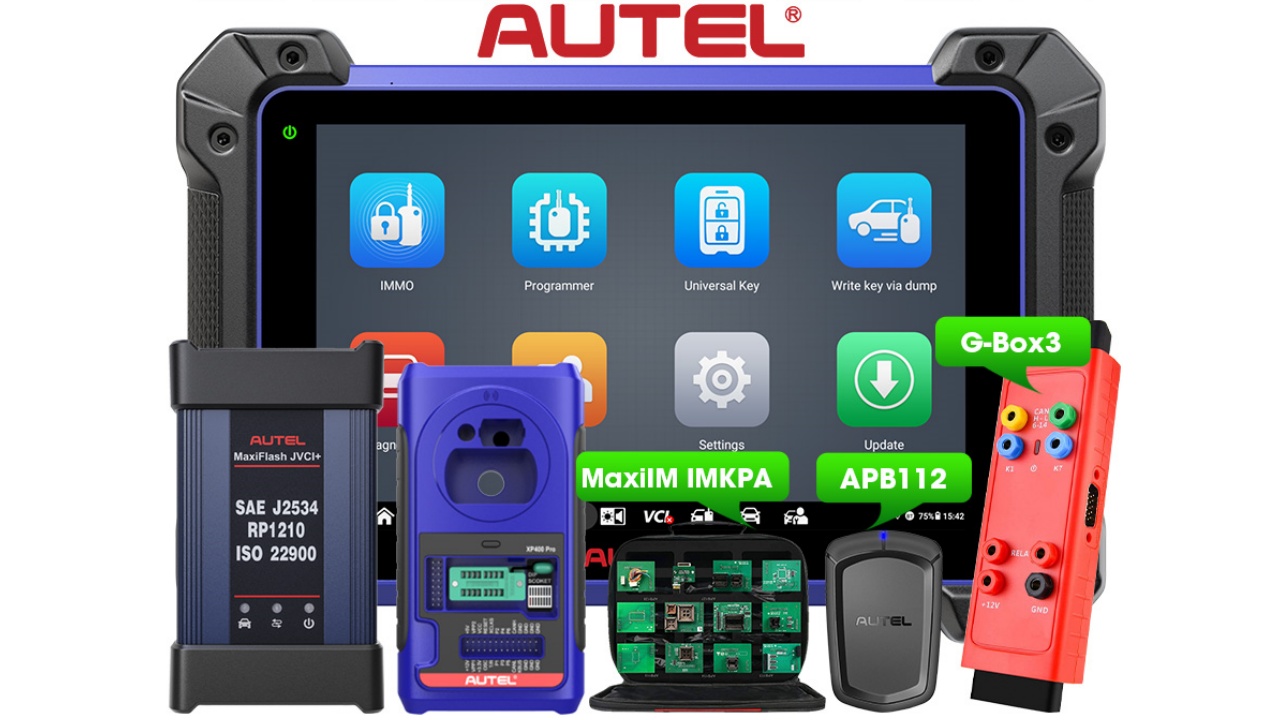
Modern cars are more reliable, but the indicator can signal failures across multiple systems at once, lengthening the diagnosis with standard tools. An autel diagnostic tool reads vehicle data directly, shows fault codes, and tracks live system behavior. Devices like the AUTEL MaxiIM IM608 II also combine diagnostics with active control and ECU communication, which helps narrow down problems in less time during workshop work. In many repair setups, Lenkor’s distribution and support services supply these tools to technicians who handle daily fault checks across different car brands.
Full System Scanning
Faults rarely stay in one module. One issue can trigger alerts across engine, braking, and stability systems. Autel tools connect to multiple control units in one scan instead of checking them separately. This provides a complete list of stored issues at once, reducing the time spent switching between systems. In workshops supported by Lenkor, this approach is often used across mixed-vehicle fleets, where different models require consistent scanning methods.
Engine Fault Reading
Engine trouble can be attributed to issues with fuel, air intake, ignition, and the exhaust system, among others. The Autel scanners retrieve fault codes stored in the ECU, helping determine why the check engine light is on. Rather than looking into several causes, technicians will begin with the saved codes to identify the faulty part.
ABS System Checks
ABS problems can result from faulty wheel speed sensors, wiring issues, or the control module. The Autel scan tool can diagnose ABS codes and identify which wheels need repair. This avoids dismantling parts without confirmation. It also helps identify whether the issue is mechanical or electronic before repairs begin.
Live Data Monitoring
Fault codes only show what has already failed. Live data shows what is happening right now. Sensors can behave normally when idle but fail under load or during driving. Live data allows technicians to compare expected values with real readings. This helps confirm whether a part is faulty or reacting to another system issue.
Active Testing for Confirmation
Active testing allows direct control of vehicle components from the diagnostic tool. Functions such as injector activation, fan control, or pump checks can be run to see if parts respond correctly. If a component does not react, the fault becomes easier to isolate. In some workshop setups, tools like the AUTEL MaxiIM IM608 II are used alongside other service equipment to confirm system response during repair checks.
Sensor Fault Detection
Today’s cars rely on sensors for proper engine timing, braking and stability control. Sometimes, a single problem sensor can affect multiple systems. Autel tools compare sensor output with expected values, making it easier to detect irregular behavior without having to replace parts through trial and error.
ECU Data Review
The ECU stores system history, configuration data, and fault records. Accessing this information helps when issues appear intermittently. Instead of relying only on a short test drive, technicians can review stored data patterns. This makes it easier to identify faults that do not stay active all the time. Lenkor supplies ECU-capable diagnostic tools to workshops that handle both routine and complex vehicle repairs.
Auto Scan Function
Auto Scan performs a full system check without manual module selection. The tool automatically detects installed systems and lists all faults in one report. This reduces initial inspection time and helps technicians plan repairs before touching the vehicle.
Repair Reporting
Diagnostic reports organize fault data in a structured format. They show affected systems, error codes, and scan results. Many Autel tools support report saving, printing, and cloud storage. Workshops use these reports to track repair progress and compare results before and after repairs.
Vehicle Communication Protocols
Modern vehicles use various communication technologies, such as CAN FD, DoIP, and SAE J2534. All these types of communication technology are supported by the Autel Scanner. Thus, one does not need two scanners to scan both old and modern vehicles. This helps reduce compatibility issues in mixed workshop environments.
Reduced Trial-and-Error Repairs
Without diagnostics, repairs often depend on repeated part replacement. This increases cost and repair time. Autel tools reduce this by combining fault codes, live data, ECU access, and active testing. Technicians can focus on confirmed issues instead of uncertain symptoms.
Conclusion
With Autel diagnostic tools, fault finding is done quickly through system scanning, live data reading, ECU access, and active testing. This allows technicians to see how different vehicle systems interact instead of checking parts individually. In workshop environments where time and accuracy matter, this reduces unnecessary steps and improves repair planning. Lenkor supports the supply and distribution of these diagnostic systems to repair businesses serving multiple vehicle brands and service conditions.