The Flavoring Problem in Private Label Toothpaste Tablets (And How Good Manufacturers Solve It)
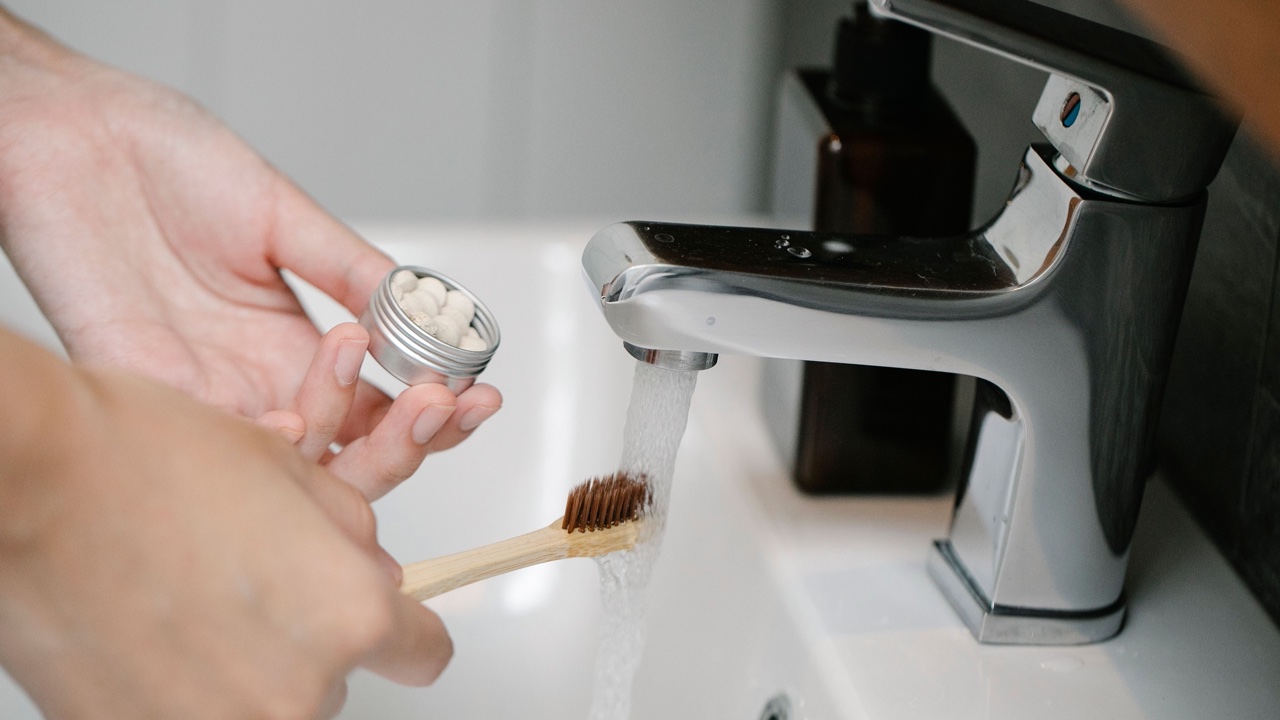
Most of the conversation around toothpaste tablets focuses on format innovation and sustainability positioning. Less attention goes to the part that actually determines whether consumers come back for a second purchase: what the tablet tastes like when you’re chewing it, and how your mouth feels after you’re done brushing.
Flavoring is harder in tablets than in paste, and it’s the reason that the quality gap between manufacturers in this category is wider than in conventional toothpaste. A brand launching private label toothpaste tablets that doesn’t understand this going in tends to discover it the hard way — through consumer reviews that describe the tablets as “chalky,” “medicinal,” or “nothing like the mint flavor described on the label.”
Why Flavoring Tablets Is Different From Flavoring Paste
In a conventional toothpaste paste, the flavor compound is distributed throughout a hydrophilic base that suspends it evenly and protects it during processing. The liquid-phase manufacturing process allows for precise flavor dosing and good distribution. The flavor that goes in is close to the flavor that comes out, because the process doesn’t stress the flavor molecules significantly.
Tablets are compressed powder. The manufacturing process involves dry mixing of ingredients, then compression under pressure that generates heat. Many flavor compounds are volatile — they evaporate or degrade under heat and pressure. The tablet that passes the flavor specification in the manufacturing lab may taste different after six months on shelf, because the compression process has damaged the flavor compound’s stability in ways that only become apparent over time.
Flavor intensity in tablets is also harder to calibrate than in paste. The consumer’s experience involves two stages: the chew phase, where the tablet breaks down and the flavor releases, and the brush phase, where the now-pasty mixture is worked through the mouth. The flavor profile that works in stage one may feel wrong in stage two. A mint that’s pleasant on the chew can become overwhelming when brushed, or a mild flavor on the chew can disappear entirely when diluted with saliva during brushing.
The Stability Problem Nobody Talks About
Related to the compression issue is shelf stability of flavor. Toothpaste tablets are typically marketed on their long shelf life compared to paste — the dry format resists microbial contamination and doesn’t require the same preservative approach as a wet product. But that long shelf life only counts in the brand’s favor if the flavor is still intact at the end of it.
Flavor loss in tablets during storage is real. The same volatile properties that make certain flavor compounds challenging to process under compression also make them prone to migration out of the tablet matrix over time, especially in packaging that isn’t vapor-sealed. A tablet that smells appropriately minty when you open a fresh tin can smell noticeably less minty after six months, particularly if the packaging allows any air exchange.
Good manufacturers run accelerated stability testing specifically on flavor retention — not just on the tablet’s physical integrity and active ingredient concentration, but on sensory properties including flavor intensity and character. They know which encapsulated flavor forms hold up better over time and will specify them even if they cost more per kilogram than the unencapsulated alternatives. A manufacturer who doesn’t run flavor stability testing is a manufacturer whose product will smell different in six months than it did when it left the factory.
The Aftertaste Question
A specific issue that separates well-formulated tablets from mediocre ones is aftertaste. The sweetener system, the active ingredients, and the flavor compound all contribute to what the consumer’s mouth tastes like ten minutes after brushing.
Xylitol is commonly used as a sweetener in tablets because of its dental benefits and pleasant taste, but the dosing matters. Too little and the tablet tastes medicinal; too much and it leaves a cloying sweetness that consumers describe as artificial. Getting xylitol dosing right requires tasting through iterations rather than just optimizing to a formula spec.
Certain active ingredients that are common in whitening or remineralizing tablet formulas also affect aftertaste. Hydroxyapatite, which has become popular in clean formulations as a fluoride alternative, has its own taste character that interacts with flavor compounds in ways that need to be accounted for in the formula. A mint flavor that works perfectly in a basic tablet may not work as well in a hydroxyapatite formula — the manufacturer who knows this has already solved it in prior development; the one who doesn’t is learning it on your product.
What to Ask Manufacturers About Flavoring
The questions that reveal whether a manufacturer actually has flavoring figured out:
Can you share sensory evaluation data from stability testing on your existing tablet formulations? A manufacturer with real data on flavor retention over time will have this and won’t hesitate to share it. One who doesn’t have it will pivot to describing their testing process rather than showing results.
How do you approach flavor load in your tablet compression process? The answer should reference encapsulated or microencapsulated flavor forms for volatile compounds, and should demonstrate awareness that compression generates conditions that degrade some flavors. A generic answer about “using high-quality flavor suppliers” is not an answer to this question.
What sweetener system do you use and how is dosing determined? The answer should reference sensory panel evaluation, not just formula specification. Sweetener levels that read well on a spec sheet don’t always read well in the mouth, and a manufacturer who knows this runs human taste evaluation alongside analytical testing.
Why This Is Where Private Label Decisions Get Made
A private label brand has limited ways to differentiate a tablet product from competitors. The format is largely the same, the sustainability story is similar, the basic active ingredient options are known. The place where genuine differentiation happens is in the experience — and the experience is mostly flavor and texture.
Consumers who try a toothpaste tablet and find it pleasant to use, with a flavor that tastes like what it claims and a clean finish after brushing, become habitual users. Consumers who find it chalky or medicinal or weirdly sweet don’t come back. The difference between those outcomes is mostly in how seriously the manufacturer took the flavor problem.
For brands evaluating private label toothpaste tablets manufacturers, the flavor evaluation stage is where the real capability assessment happens. Request samples across multiple flavor variants, evaluate them fresh and after 60 days of storage at ambient conditions, and pay attention to how the flavor holds and what the aftertaste feels like. A manufacturer confident in their flavoring will welcome that evaluation. One who isn’t will try to move you past it quickly.